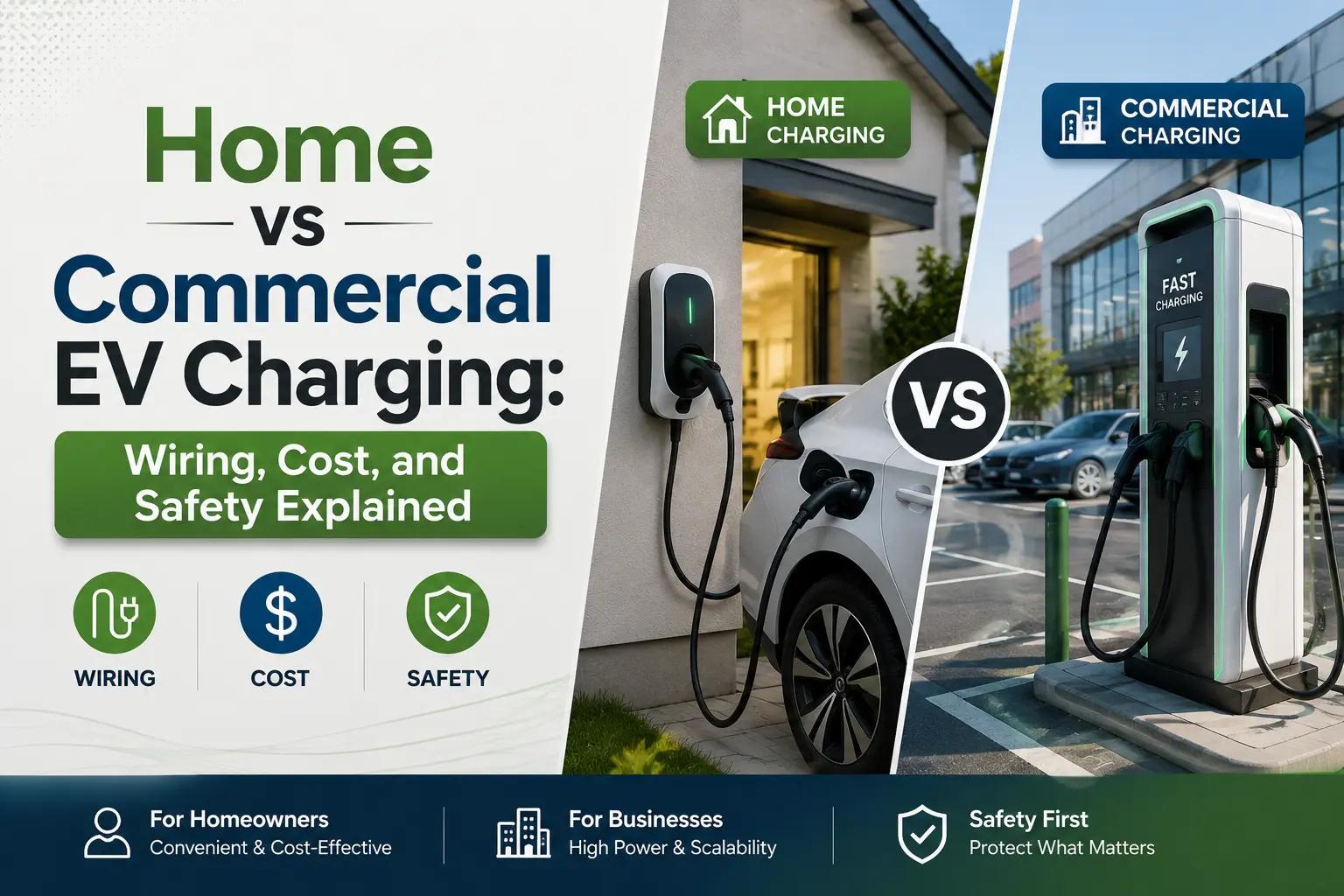

As electric vehicles become more common across India, understanding the difference between home EV charging and commercial EV charging stations is becoming increasingly important. Whether you are an EV owner, apartment resident, business owner, or entrepreneur exploring the EV infrastructure sector, knowing the basics of EV charging wiring, installation cost, and charging safety can help you make better decisions.
Understanding Home EV Charging
Home charging is the most convenient option for daily EV users. Most electric vehicle owners prefer charging overnight using a dedicated charger installed in their parking area. A typical home EV charging setup usually works with single-phase power and is designed for moderate charging speeds.
The wiring requirements for residential charging are simpler compared to commercial systems. However, proper cable quality, earthing, circuit breakers, and load management are essential for safe operation. Using low-quality wiring or overloaded circuits can create overheating risks and reduce charger efficiency.
In terms of cost, home EV charger installation is relatively affordable. Expenses generally depend on charger capacity, wiring length, electrical upgrades, and installation complexity. For individual users, home charging offers long-term convenience and lower operational costs compared to relying entirely on public charging networks.
Another important advantage is flexibility. Users can charge vehicles during off-peak electricity hours, making smart EV charging solutions more economical for households.
How Commercial EV Charging Is Different
Commercial EV charging stations are built to support multiple vehicles, faster charging speeds, and continuous daily usage. These charging systems are commonly installed in shopping malls, office campuses, hotels, highways, fuel stations, and residential communities.
Unlike residential systems, commercial EV charging infrastructure requires heavy-duty wiring, three-phase electrical connections, advanced transformers, and higher power capacity. Since these stations often support fast chargers or DC chargers, safety standards become even more critical.
The installation cost for commercial charging is significantly higher due to land preparation, electrical upgrades, charger hardware, networking systems, and maintenance requirements. However, businesses can benefit from growing EV adoption and increasing public demand for reliable charging access.
Commercial charging stations also require smart monitoring systems for billing, remote management, power distribution, and user authentication. This makes technology integration a major part of the overall investment.
Safety Considerations for EV Charging
Whether it is residential or commercial charging, safety should never be overlooked. Proper installation by trained professionals is essential to prevent electrical hazards.
For home charging, users should ensure:
- Dedicated electrical circuits
- Proper earthing and surge protection
- Weather-resistant chargers for outdoor installations
- Certified EV charging equipment
For commercial charging stations, additional safety measures include:
- Fire protection systems
- Real-time monitoring software
- Load balancing systems
- Emergency shut-off controls
- Regular maintenance inspections
As India’s EV ecosystem expands, following EV charging safety standards will become increasingly important for both users and businesses.
Choosing the Right Charging Solution
The choice between home and commercial EV charging depends on driving habits, vehicle usage, charging frequency, and long-term cost goals. Home charging is ideal for personal convenience, overnight charging, and predictable daily commuting. In contrast, commercial charging is better suited for businesses, fleets, public access, and high-utilization environments where multiple vehicles require fast, continuous charging.
For example, a private EV owner who drives 40–60 km daily can save time and reduce charging costs by installing a home charger in their garage. Overnight charging ensures the vehicle is ready every morning without depending on public stations.
On the other hand, a delivery company operating multiple electric vans across a city benefits more from commercial charging infrastructure. Fast chargers installed at a depot allow vehicles to recharge quickly between shifts, improving operational efficiency and supporting continuous business operations.
Driving the Next Phase of Electric Mobility
India’s electric mobility sector is growing rapidly, and reliable charging infrastructure is becoming the backbone of this transformation. As more consumers shift toward EV ownership, the demand for safe, scalable, and accessible charging solutions will continue to increase.
The future of transportation will depend heavily on smart charging ecosystems that support efficiency, sustainability, and convenience. Businesses investing in EV infrastructure today are positioning themselves for long-term growth in one of India’s fastest-growing industries.
With expanding opportunities in the EV sector, we at GoLumo are helping businesses and entrepreneurs build future-ready charging solutions through advanced technology, scalable infrastructure, and innovative mobility support systems.